
An AI-native workspace to de-risk your software development
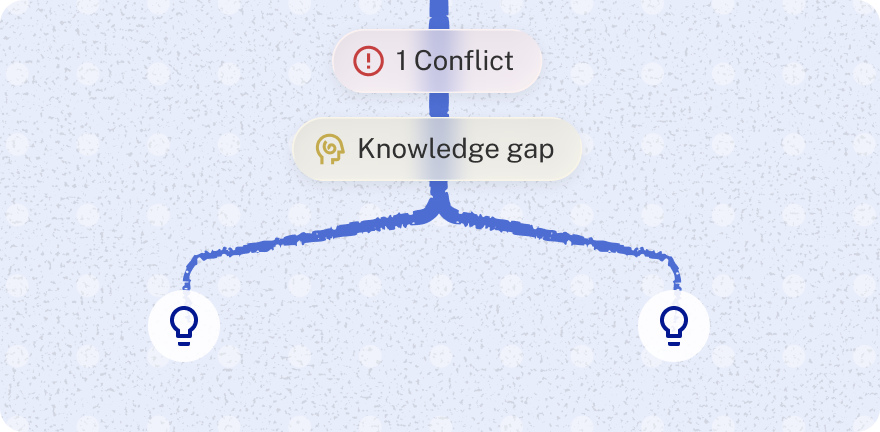
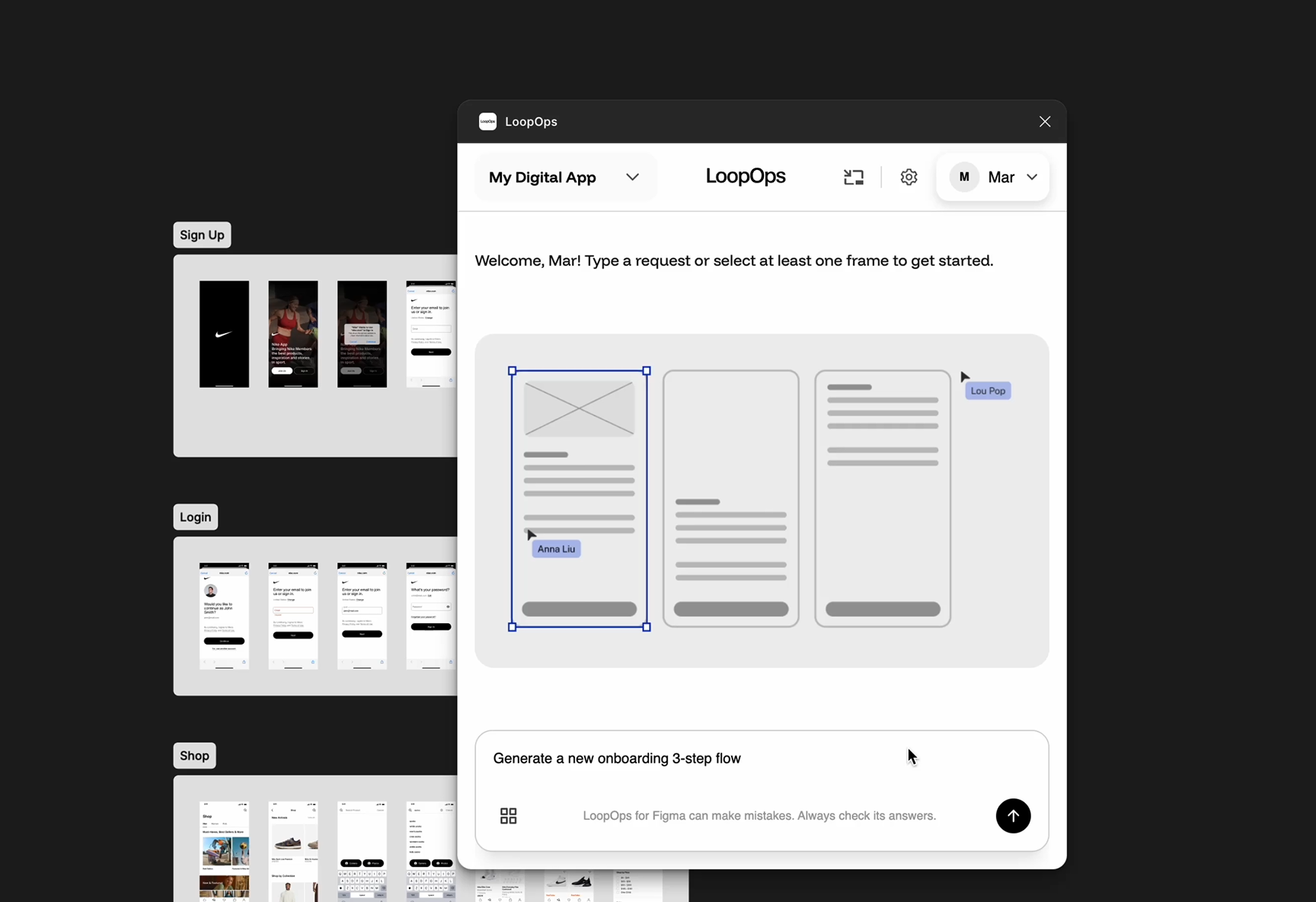
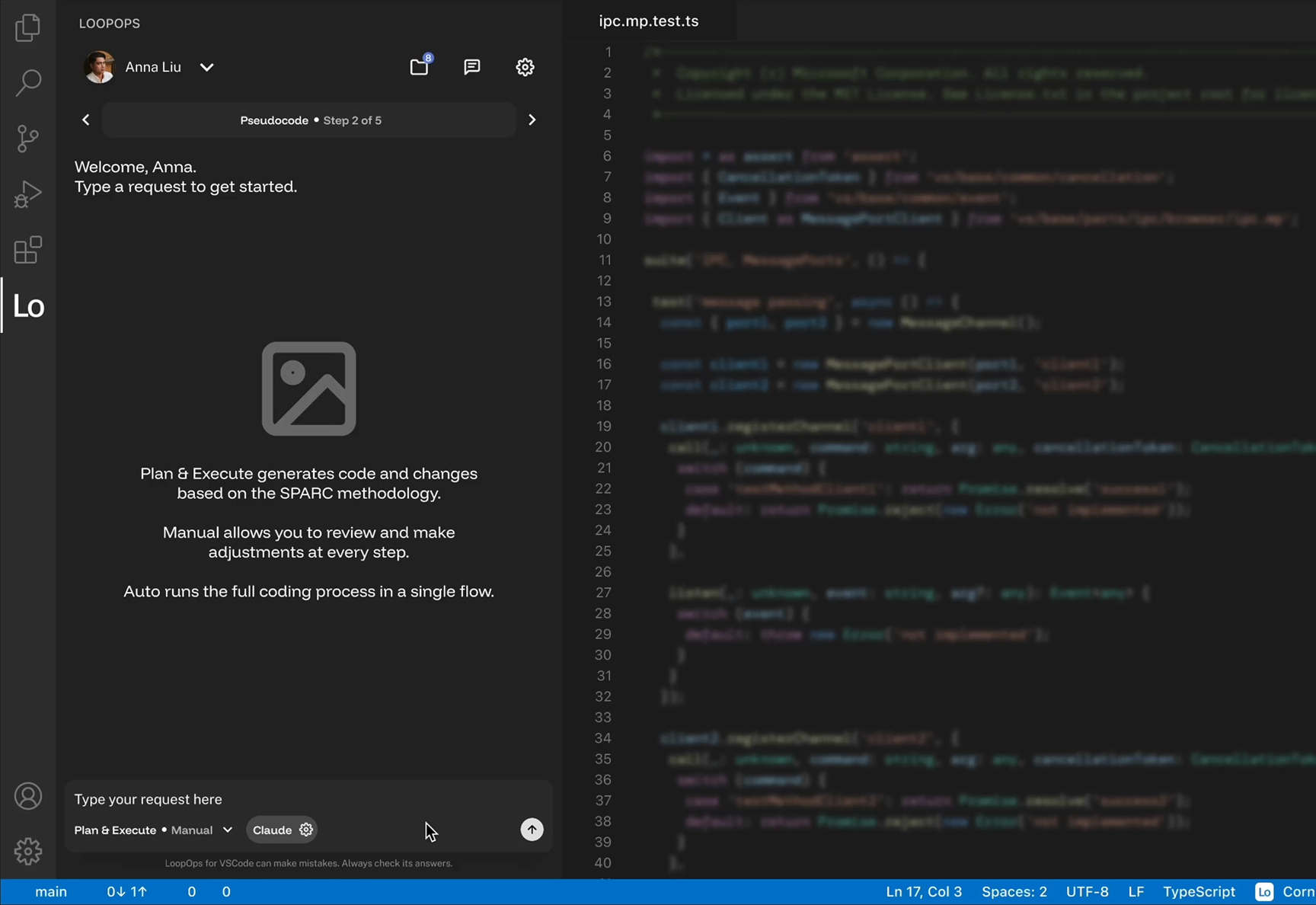
Ending the era of fragmented teams and broken context across workflows. LoopOps is a single source of truth, flowing silently through your favorite tools, like Figma, JIRA and Github.
Stop worrying about what might go wrong and start shipping the kind of bold, beautiful software the world has never seen before. De-risk and deliver: introducing the new standard of software development.
69%*
Of custom software fail or flawed
19% are outright failures, whereas 50% is reported late, over budget or written-off quickly.
Source: PMWorld, Standish Group48%*
Fail due to poorly defined requirements
Which leads to misalignment and rework. Often due to inadequate gathering or evolving stakeholder needs.
Source: statista$260 billion*
Annual cost of unsuccessful IT Projects
In the US, including failures, cancellations, and massive overruns that drain resources without delivering value.
Source: CISQ.orgLoopOps is set out to change this and de-risk software development.
Deploy local and remote agents in each phase of the product development lifecycle.
LoopOps closes the loop across your entire product lifecycle, through agents that are deployed locally in our platform, and remotely across your favorite tools.
It keeps everyone in sync, provides up to date context and intelligence and provides developers with the same crystal-clear context, that product and design teams have.
Onboard
Align project and product goals
Discover & Define
Turn a challenge into product strategy and requirements
Design
Validate Figma designs against product strategy and context
Develop
Check product context and updates during coding and testing

LoopOps Multi-agent System (local and remote)
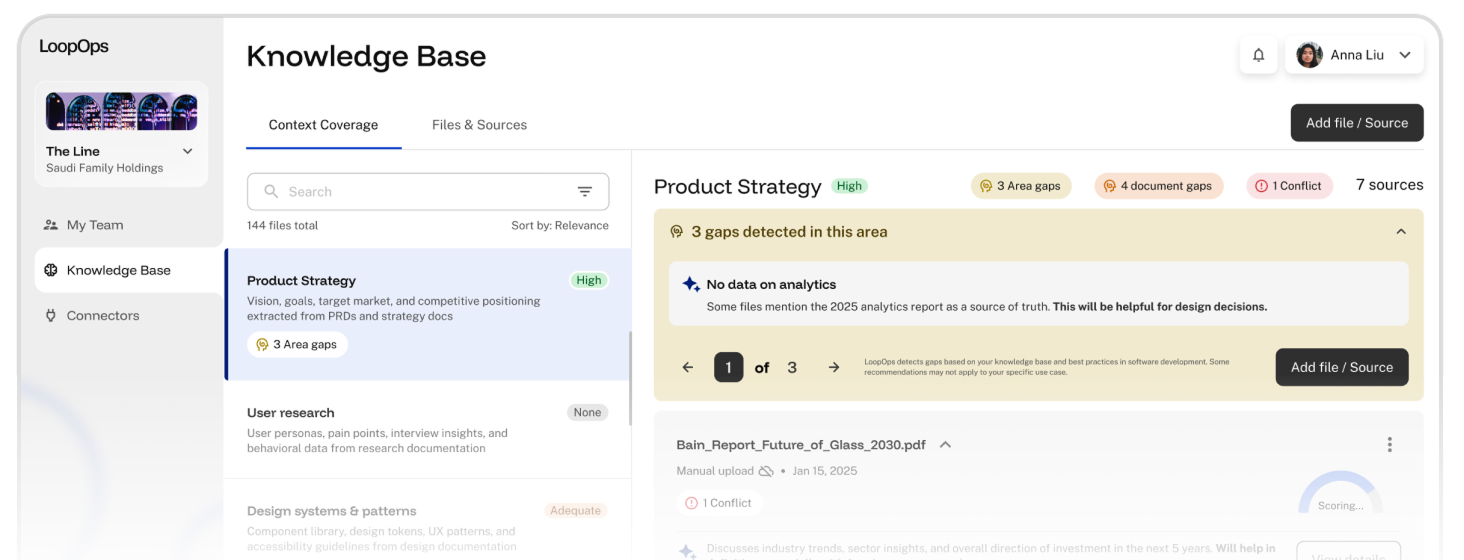
Real-time Product Context and Knowledge base
Prioritize better, validate live, and ship 2x faster with LoopOps

Human in the lead, not just in the loop
Your team calls the shots. AI amplifies your creativity, but never steals the wheel. We understand that great product design still requires human decision making and oversight.
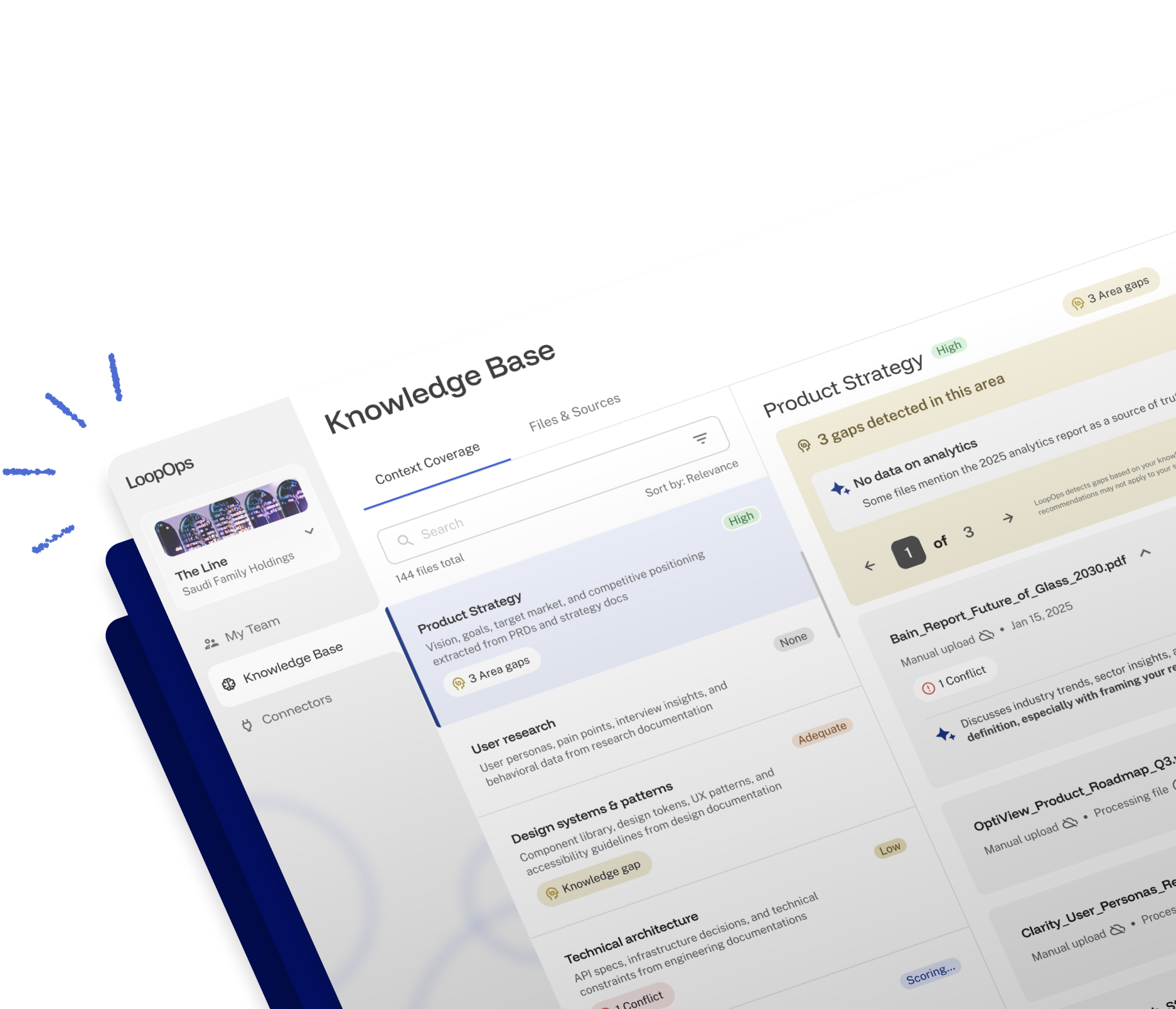
Real-time, contextualized data
Get pro-active advice, real-time context and instant validation on your work, through vectorized knowledge about your project.

Track business value across the SDLC
Connect and track business metrics to product development.

Remotely deployed Agents
LoopOps works quietly inside your tool chain, delivering context exactly when and where you need it, without disruption.

Get looped in, in 4 easy steps
1. Setup the environment
Identify all project, company and industry data that agents and humans will leverage during product life cycle. This data is then vectorized and labelled, so LoopOps can use it as context.

2. Tool chain Integrations and workflows
Every company takes a different approach to product development. We identify which tools to integrate into, next to LoopOps' standard set of tool integrations.

3. Select Agents and setup product lifecycle milestones
Define User and Agent roles: what agents are required in which part of the product life cycle? What human checkpoints need to be enforced? What project milestones are essential?

4. Start your first project with your team
LoopOps is designed for teams to collaborate in a single ecosystem. Start your first project, invite your team members and start working on your first project.

1. Setup the environment
Identify all project, company and industry data that agents and humans will leverage during product life cycle. This data is then vectorized and labelled, so LoopOps can use it as context.

2. Tool chain Integrations and workflows
Every company takes a different approach to product development. We identify which tools to integrate into, next to LoopOps' standard set of tool integrations.

3. Select Agents and setup product lifecycle milestones
Define User and Agent roles: what agents are required in which part of the product life cycle? What human checkpoints need to be enforced? What project milestones are essential?

4. Start your first project with your team
LoopOps is designed for teams to collaborate in a single ecosystem. Start your first project, invite your team members and start working on your first project.